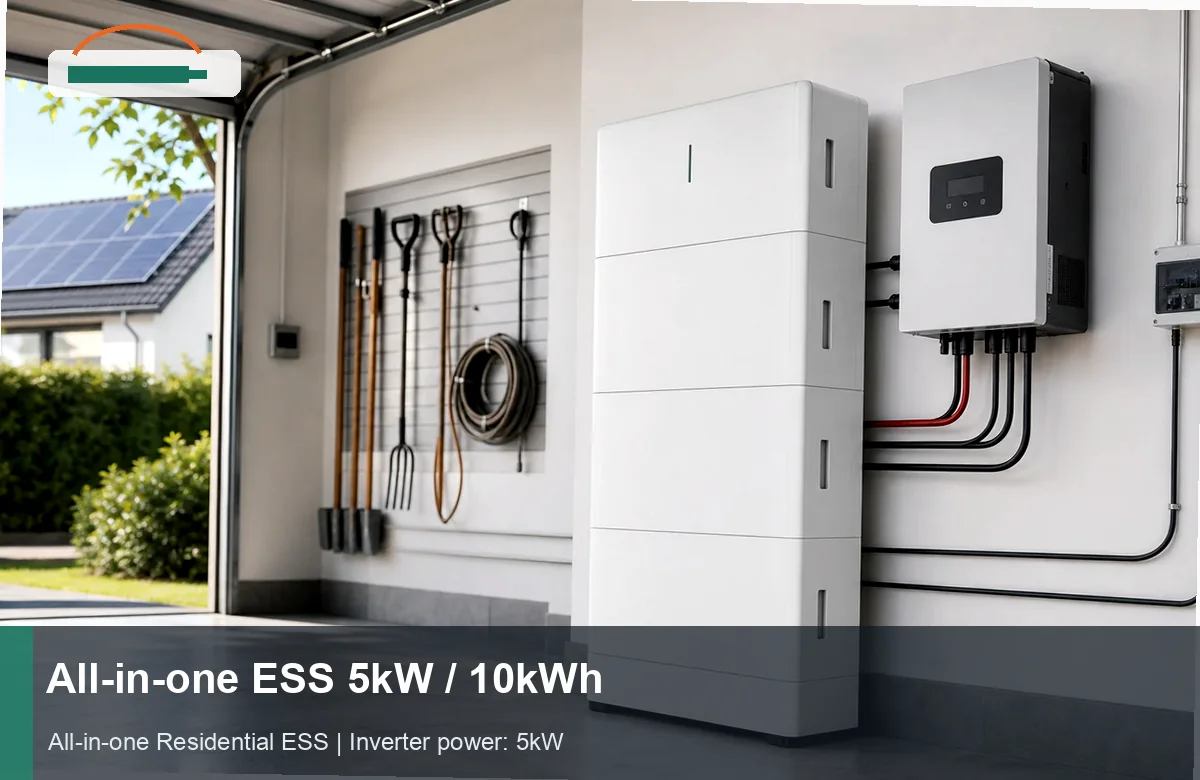
Residential Energy Storage / All-in-one Residential ESS
All-in-one ESS 5kW / 10kWh
All-in-one wall-mounted residential ESS combining 5kW inverter and modular battery capacity.
Inverter power5kWNominal voltage400VProtectionIP65
 Spire ESSOEM clean-energy sourcing
Quick kWh estimate
Estimate the battery energy band from load and backup hours, then shortlist products for a quote conversation.
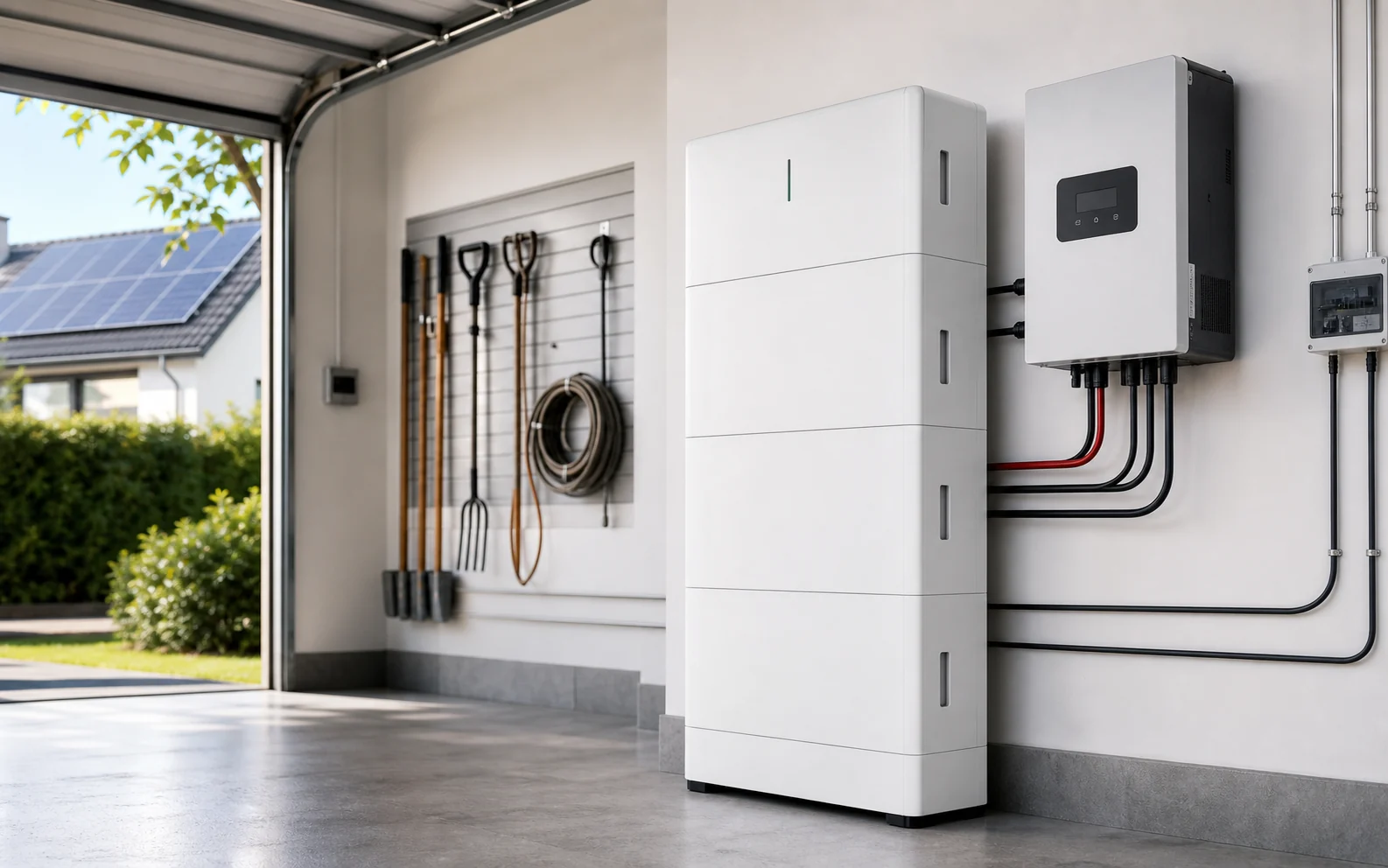
Before an installer or distributor can recommend a home battery, they need two numbers: how much energy the household uses each day, and how many hours of backup the buyer wants if the grid goes down. Those determine the battery energy band; everything else (which module, stack or all-in-one, which inverter) follows. The calculator above is a fast way to reach that band. The sections below explain the method in enough detail to work through it with a buyer on a site visit or call, and why each input matters.
Spire ESS residential products cover the common home storage band from roughly 5kWh to 15kWh in a single unit, and above that through stacking or high-voltage strings. The BluE-PACK5.1 at 5.12kWh nameplate (4.6kWh usable) is stackable and parallelable. The All-in-one ESS 5kW comes in 5, 10, and 15kWh battery configurations in one cabinet. The HBP30-5048 is a 5000W all-in-one with a 12.8kWh battery, and the R5KL1-G2 hybrid inverter at 5kW pairs with 40 to 58V batteries for buyers who want to choose battery and inverter separately. Use the method below to find the fit, then confirm final sizing with sales.
What to decide before asking for price.
Daily load is the starting number for every residential battery conversation. The most reliable source is the electricity bill: most show kilowatt-hours per billing period, which you divide by the number of days for a daily average. A typical household uses somewhere in the range of 8 to 20kWh per day depending on size, climate, cooking method, and whether there is an EV or heat pump on site. Buyers without a bill can estimate by listing major appliances (fridge, washing machine, oven, TV, lighting, laptop) and average daily runtime, multiplying watts by hours for each and summing.
For backup sizing specifically, you do not always need to cover the full household load. Many buyers want essential-circuit backup only: fridge, lighting, phone charging, maybe a small heater or fan. A backup calculation can be half or less of the total daily figure. Ask the buyer to separate must-have from nice-to-have loads before putting a number in the calculator; that distinction often moves the recommended band by a full 5kWh, which changes the shortlist significantly.
Once you have the backup load in kW and the desired duration in hours, the raw energy requirement is load (kW) multiplied by backup hours = minimum energy (kWh). A household running 1.5kW of essential loads for 6 hours needs at least 9kWh available at the terminals during the outage. The battery also covers self-consumption between PV generation events, and the buyer may want a reserve margin so it does not run flat every night.
Backup duration varies sharply by market and buyer. In stable-grid markets buyers may want only 2 to 4 hours to bridge a short outage; in markets with regular multi-hour outages they often want 8 to 12 hours or full overnight. The backup-hour input is a sales qualification question as much as a technical one. Ask for it explicitly; buyers who have experienced long outages have a clear answer, and it drives the conversation toward larger configurations.
Every battery has a depth-of-discharge (DoD) limit: the percentage of stored energy the BMS allows to be drawn before it protects the cells. The BluE-PACK5.1 has 5.12kWh nameplate but 4.6kWh usable, around 90% DoD. The SNE5126LFP-BL specifies 80% DoD, as do the high-voltage SNE series. For sizing, divide the energy requirement by the DoD fraction to get the nameplate you need: if the buyer requires 9kWh usable and the product is 90% DoD, the nameplate must be at least 10kWh.
Beyond DoD, most installers add an operational reserve of 10 to 20% on top of the calculated requirement. This buffer covers load-estimate uncertainty, temperature derating in cold climates (LiFePO4 performance falls below roughly 10 degrees Celsius), and gradual capacity fade over the battery's life. The practical result: a household with a 9kWh backup requirement and a 10 to 15% reserve should look at nameplate capacity in the 11 to 13kWh range, which lands in All-in-one ESS 10kWh or 15kWh territory depending on the reserve and backup hours.
Battery energy (kWh) and inverter power (kW) are different quantities and both must be confirmed. Energy determines how long the backup lasts; power determines whether the inverter can handle the load at all. If peak load exceeds the inverter's continuous output, the system trips or throttles on startup of high-draw appliances like refrigerator compressors, air-conditioner motors, or water pumps.
The R5KL1-G2 hybrid inverter is rated at 5kW continuous and accepts 40 to 58V batteries, covering the BluE-PACK5.1 and similar 48V-class batteries, with a maximum PV input of 7.5kW that is generous for most residential roofs. The HBP30-5048 all-in-one has a 5000W output and a built-in 48V, 12.8kWh battery. For buyers with a backup load exceeding 5kW (for example running an air conditioner, a well pump, and lighting together), move to a higher-power inverter or accept that high-draw appliances stay off the backup circuit. Clarify the load list before finalizing the inverter.
Residential systems come in three physical formats, and the right one depends on installation space, capacity target, and inverter preference. Stackable modules like the BluE-PACK5.1 are independent 5.12kWh units placed side by side or stacked and paralleled to reach higher capacities; they pair with a separate hybrid inverter and let the installer start small and add later. This suits phased expansion or sites that already have a hybrid inverter.
All-in-one ESS units combine inverter and battery in one wall cabinet. The 5kW all-in-one is available with 5, 10, or 15kWh of battery. This is the simplest install story (one box, one quote, one commissioning visit) and the easiest to explain in a catalog or to a homeowner. High-voltage batteries like the SNE series (roughly 12kWh to 36.8kWh) need a high-voltage compatible inverter and are typically specified for larger homes or light commercial where the requirement exceeds what a single 48V stack delivers comfortably. Confirm the inverter voltage window before specifying high-voltage batteries.
A sizing conversation has no value until it becomes a qualified quote request. The inputs that let sales return a useful quote quickly are the estimated daily load or backup load in kW, the desired backup duration in hours, whether the buyer needs a complete all-in-one package or a battery to pair with an existing or new inverter, the destination country, and the quantity. Country matters because certification, grid connection standards, and sometimes voltage ranges differ by market; quantity matters because it affects packaging, shipping, and whether a sample or trial order is the right first step.
If the buyer is an installer rather than an end user, it also helps to know the inverter brand already used in their projects, since BMS communication compatibility (CAN vs RS485 and protocol version) is a real constraint. Send those details with the inquiry and the first response from sales is a useful product shortlist rather than a clarifying question. The quoteFocus items below are what sales will ask for anyway, so collecting them upfront saves at least one round trip.
| Household profile | Typical backup load | Backup hours | Suggested nameplate band | Example product |
|---|---|---|---|---|
| Small apartment, essential circuits only | 0.5 - 1 kW | 4 - 6 h | 4 - 8 kWh | All-in-one ESS 5kW / 5kWh |
| Medium home, fridge + lights + laptop | 1 - 1.5 kW | 6 - 8 h | 8 - 15 kWh | All-in-one ESS 5kW / 10 or 15kWh |
| Medium home with stackable expansion | 1 - 2 kW | 6 - 10 h | 10 - 15 kWh | 2 to 3 x BluE-PACK5.1 + R5KL1-G2 |
| Larger home or partial EV charging | 2 - 3 kW | 8 - 12 h | 12 - 20 kWh | HBP30-5048 (12.8kWh) or 3 x BluE-PACK5.1 |
| Large home, full overnight, or light commercial | 3 - 5 kW | 10 - 16 h | 20 - 36 kWh | SNE high-voltage series (12 - 36.8 kWh) |
All figures are approximate planning ranges only. Actual sizing depends on measured load data, local grid conditions, the DoD limit of the selected product, temperature, and site constraints. Confirm final product selection and capacity with sales before issuing a quote to your customer.
Quick estimate
This estimate is for sourcing discussion only. Sales should confirm final configuration, certification, and delivery plan.
Products
Residential Energy Storage / All-in-one Residential ESS
All-in-one wall-mounted residential ESS combining 5kW inverter and modular battery capacity.
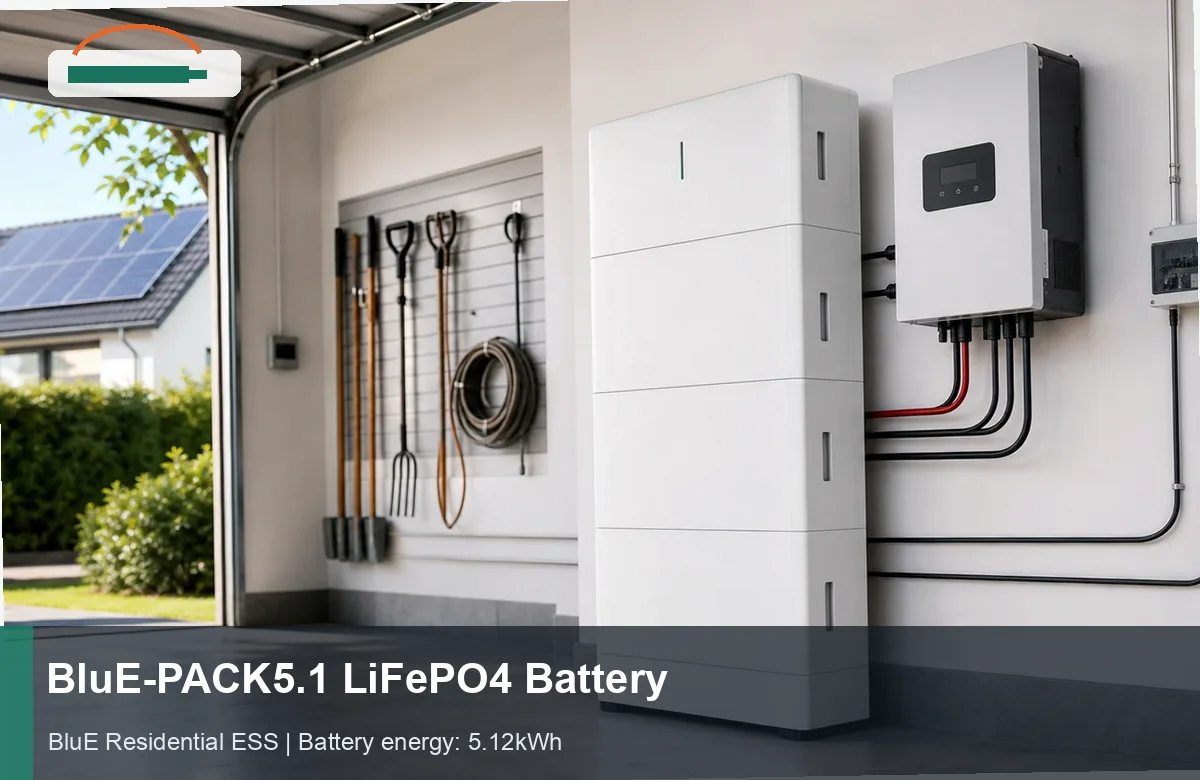
Residential Energy Storage / BluE Residential ESS
5.12kWh LiFePO4 battery module for scalable residential energy storage systems.
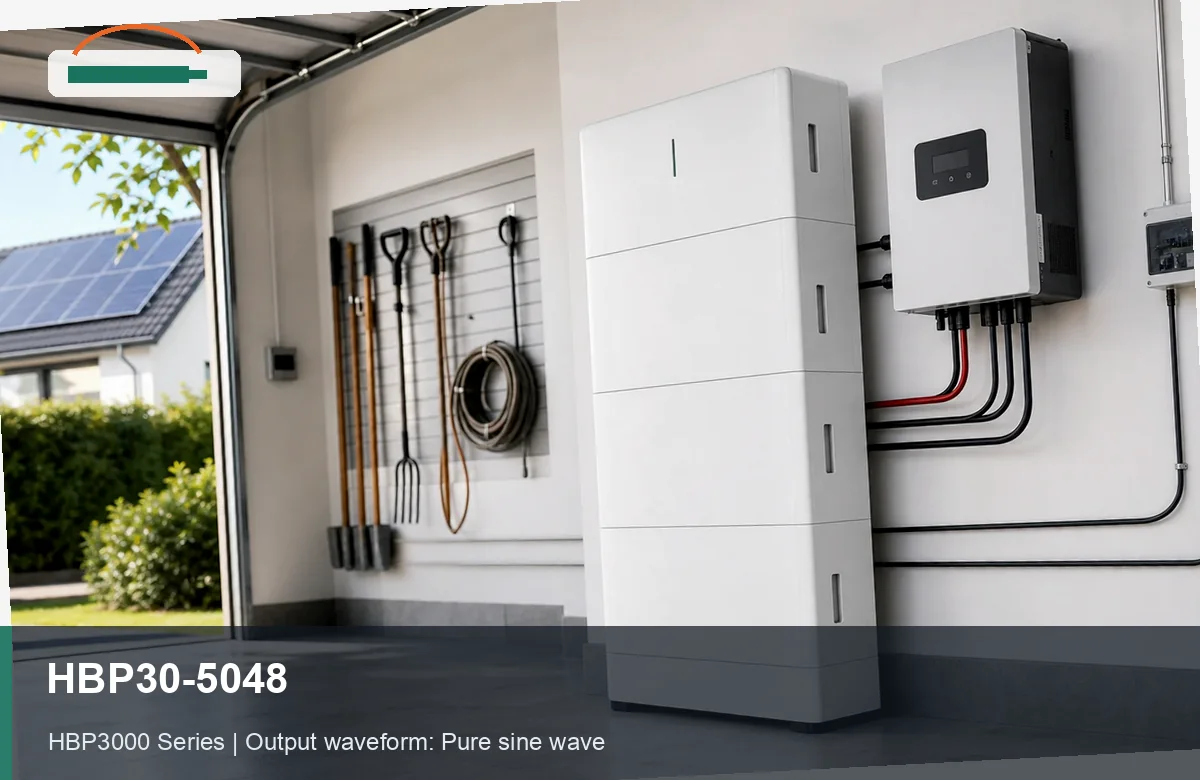
Residential Energy Storage / HBP3000 Series
Higher-capacity solar storage and backup systems for home and light commercial energy needs.
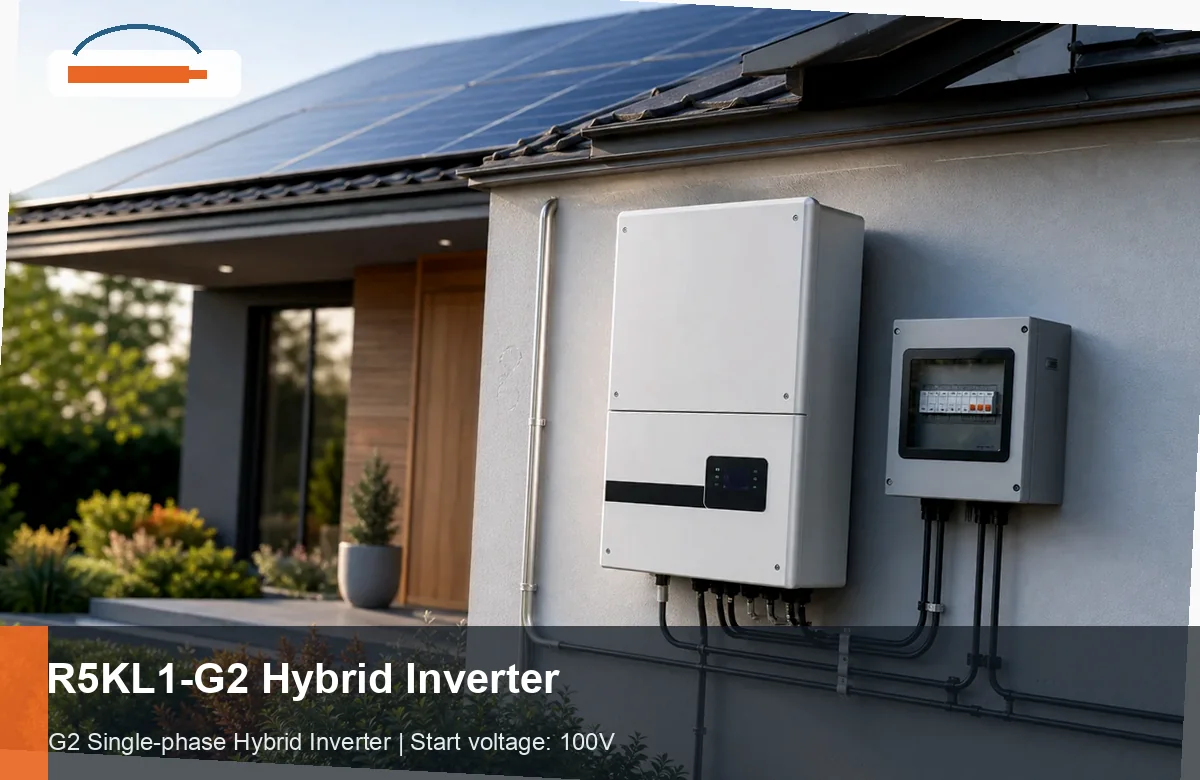
Solar Inverters / G2 Single-phase Hybrid Inverter
Single-phase hybrid inverter range for residential solar storage systems.
Multiply the backup load in kW by the desired backup hours for the raw energy in kWh, divide by the product's usable DoD fraction, and add a 10 to 20% reserve. For example, 1.5kW for 6 hours needs 9kWh usable; at 90% DoD the nameplate should be at least 10kWh, and with a 15% reserve you are around 11 to 12kWh, which puts you in All-in-one ESS 10 or 15kWh territory. Confirm the exact match with sales.
It has a nameplate capacity of 5.12kWh and a usable energy figure of 4.6kWh, around 90% depth of discharge. When sizing with stacked BluE-PACK5.1 modules, use 4.6kWh per unit as the usable number, not 5.12kWh.
Yes. It is designed as a modular, stackable battery, and multiple units can be paralleled to increase total capacity, which suits phased installations starting with one or two units. Confirm the maximum parallel strings and the compatible inverter model with sales for your configuration.
Both combine inverter and battery in one unit but differ in capacity and voltage class. The All-in-one ESS 5kW comes in 5, 10, or 15kWh in a wall cabinet at 400V nominal. The HBP30-5048 is a 48V, 5000W output system with a built-in 12.8kWh battery. The right choice depends on the capacity target and which voltage class fits the broader system; confirm with sales.
Yes, and it is a common sizing mistake. Battery energy (kWh) sets how long the backup lasts; inverter power (kW) sets whether the loads can run at all. If peak backup load exceeds the inverter's continuous output, the system trips or throttles on startup of motor loads. Always confirm the peak backup load against the inverter's continuous output before finalizing.
Send the estimated daily or backup load in kW, the desired backup hours, the destination country, the quantity, and whether the buyer needs an all-in-one package or a separate battery for an inverter. For installer buyers, add the inverter brand and BMS protocol used. That set lets sales return a useful shortlist and price indication without a clarifying round trip.
AI product assistant