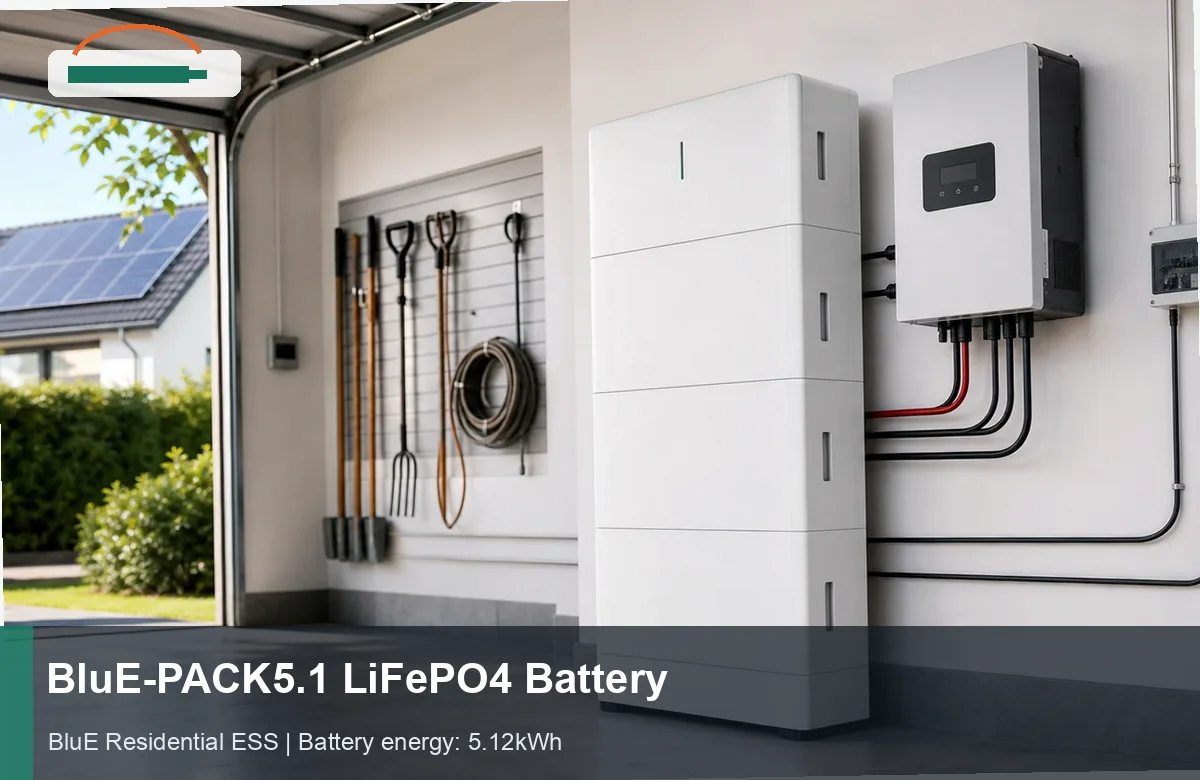
Residential Energy Storage / BluE Residential ESS
BluE-PACK5.1 LiFePO4 Battery
5.12kWh LiFePO4 battery module for scalable residential energy storage systems.
Battery energy5.12kWhUsable energy4.6kWhNominal voltage51.2V
 Spire ESSHangzhou Xiangcai Network Technology Co., Ltd.
Battery selection
A practical buyer comparison for solar storage channels that need to explain battery chemistry to installers and homeowners.
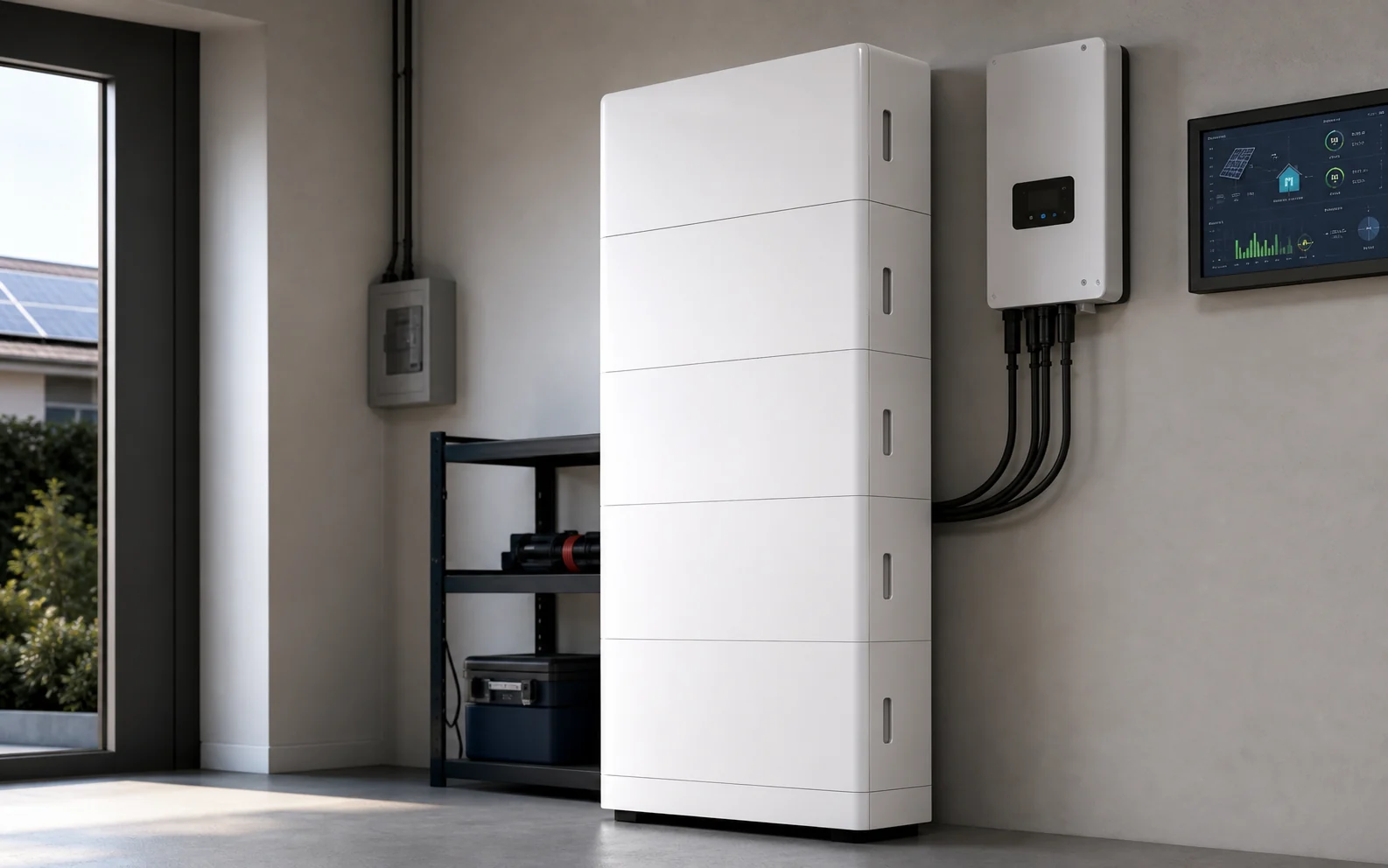
When a homeowner or installer asks whether to go with LiFePO4 or lead-acid for solar storage, the question sounds like chemistry. It is actually about how long the battery lasts, how much energy you can use without damaging it, whether the BMS talks to the inverter, and what the total cost looks like over five to ten years of daily cycling. This guide is for solar channels that need a clear, factual answer for their customers and their own sales teams, without overstating claims.
Spire ESS sells LiFePO4 batteries only, so this guide is honest rather than neutral: lead-acid still appears in the field, it still gets replaced, and a channel that understands both is better at the conversation than one that only pitches the new thing. The sections below cover the real comparison points in the order they matter for a solar storage decision, then the checks that help an installer or distributor build a clean quote request.
What to decide before asking for price.
Lead-acid batteries have been used in backup and off-grid power for decades. They are well understood, widely available, and lower in upfront cost per unit. Their constraints for solar storage are depth of discharge, cycle life, and weight per kilowatt-hour. A typical lead-acid battery is recommended to discharge only to around half of rated capacity to avoid shortening its life, delivers a few hundred to a few thousand cycles depending on the charge profile, requires ventilation because of off-gassing during charging, and weighs considerably more per usable kilowatt-hour than lithium chemistries.
LiFePO4, or lithium iron phosphate, is a lithium-ion chemistry built around an iron phosphate cathode without cobalt, which contributes to its thermal stability relative to other lithium chemistries. For solar storage the relevant advantages are deeper usable depth of discharge, substantially higher cycle life, lower weight per kilowatt-hour, no ventilation requirement for indoor installation, and built-in BMS communication that modern hybrid inverters expect. The Spire ESS BluE-PACK5.1, for example, is a 5.12kWh module with 4.6kWh usable at 90% DoD, built on CATL LFP cells, with CAN and RS485 communication, IP65 enclosure, and a 10000-cycle reference. Confirm the full specification and certification documents with sales before quoting.
The most common mistake in a battery comparison is comparing price tags without comparing the energy each battery delivers over its life. A lead-acid unit that costs less per nameplate kilowatt-hour may deliver far fewer full cycles at a safe depth of discharge than a LiFePO4 unit at the same nominal voltage. Over ten years of daily solar cycling, the replacements required for the lead-acid path can make it more expensive in total, not less.
A practical way to frame it: take usable energy per cycle multiplied by the rated cycle count. The BluE-PACK5.1 references 4.6kWh usable per cycle at 90% DoD and 10000 cycles as a design reference. The SNE5126LFP-BL wall battery is 6.656kWh nominal at 51.2V, 130Ah, with a design life referenced at more than 5000 cycles. Lead-acid cycle life at a safe depth of discharge is generally in a lower range. Take exact figures from the datasheet for the specific product compared; do not use generic numbers as binding commitments on either side.
LiFePO4 chemistry has a higher thermal runaway threshold than cobalt-based lithium chemistries and does not require active ventilation for indoor residential installation in the way flooded lead-acid does. This matters for wall-mounted and stacked residential formats often installed inside a garage, utility room, or battery cabinet. The IP65 rating on the BluE-PACK5.1 means it is sealed against dust and water jets, supporting flexible placement indoors or in a protected outdoor area. Check installation requirements in the product documentation and local codes for the site.
The second factor is BMS communication. Modern hybrid inverters expect to read battery state of charge, cell temperatures, charge and discharge limits, and fault status over CAN or RS485. Both Spire ESS residential batteries, the BluE-PACK5.1 and the SNE5126LFP-BL, carry CAN and RS485 communication. Traditional lead-acid batteries have no BMS that communicates with the inverter; the inverter relies on voltage thresholds to manage charge, which is less precise and can contribute to under- or over-charging over time. Confirm inverter compatibility in writing before specifying any model.
Lead-acid is not gone from the field. Installed backup systems, off-grid cabins, and older solar installations still run on flooded or AGM lead-acid banks. When a customer comes to an installer or distributor with one of these, the conversation is not a new installation; it is whether to replace like-for-like or upgrade the chemistry at the same time.
The practical checks for a replacement or upgrade are bus voltage (12V, 24V, and 48V strings are common), charger profile (the inverter or charger may need a firmware or profile update to handle LiFePO4 correctly), available installation space (LiFePO4 is lighter per kWh but the format changes), and whether the customer wants a short payback or is open to evaluating total lifetime cost. A like-for-like lead-acid swap is fast and familiar; a chemistry upgrade needs a careful inverter-compatibility conversation but delivers a longer second service life. Both are valid; the job is to help the customer make an informed choice rather than defaulting to whichever is cheaper on the day.
For a distributor or importer, the shipping difference matters beyond the product. LiFePO4 batteries are classified as lithium batteries for transport and require UN38.3 test documentation and an MSDS, and in some cases additional certificates depending on the destination and shipment mode. Lead-acid has its own transport classification and documentation. Neither is hard to ship, but both need the right paperwork to avoid customs delays.
Spire ESS BluE-PACK5.1 carries CE, UN38.3, and MSDS documentation. The SNE5126LFP-BL carries CE, IEC62619, UN38.3, and UL references. The All-in-one ESS 5kW/10kWh carries CE-EMC, CE-LVD, UKCA, RoHS, UN38.3, and MSDS. For any destination, confirm the exact document set required and what ships with the order versus what is available on request. Do not assume all certificates apply to all models or markets without checking.
A battery quote without a confirmed inverter match is incomplete. Battery voltage range, BMS protocol, maximum charge and discharge current, and the physical connection all need to align with the inverter on the project. For Spire ESS residential batteries the nominal voltage is 51.2V and the communication is CAN or RS485, which matches the battery voltage range of the G2 single-phase hybrid inverter line (40 to 58V). The SNE5126LFP-BL supports up to 16 parallel strings, so capacity scales from a single 6.656kWh unit to a larger bank on one bus. The BluE-PACK5.1 is stackable and parallelable for a flexible route to scale from 5.12kWh upward.
For the All-in-one ESS 5kW/10kWh the inverter is already integrated and shipped as one unit, which simplifies installation and reduces compatibility checking for the channel; the trade-off is the inverter and battery cannot be specified independently. When a channel needs inverter-brand flexibility, the standalone modules fit better; when it sells homeowners a simple single-box solution, the all-in-one is easier to explain and install. Ask sales for a matched inverter and battery quote rather than separate line items for a faster, cleaner response.
| Option | Best fit | What to confirm |
|---|---|---|
| LiFePO4 positioning | Higher cycle-life story, safer retail explanation, stronger ESS fit | Confirm certifications, BMS communication, and shipping documents. |
| Lead-acid replacement | Useful as an upgrade conversation for older backup systems | Confirm voltage, charger compatibility, and installation space. |
| Buyer decision | Total lifetime value and service support matter more than headline battery price | Ask for matched inverter and battery quote. |
Products
Residential Energy Storage / BluE Residential ESS
5.12kWh LiFePO4 battery module for scalable residential energy storage systems.
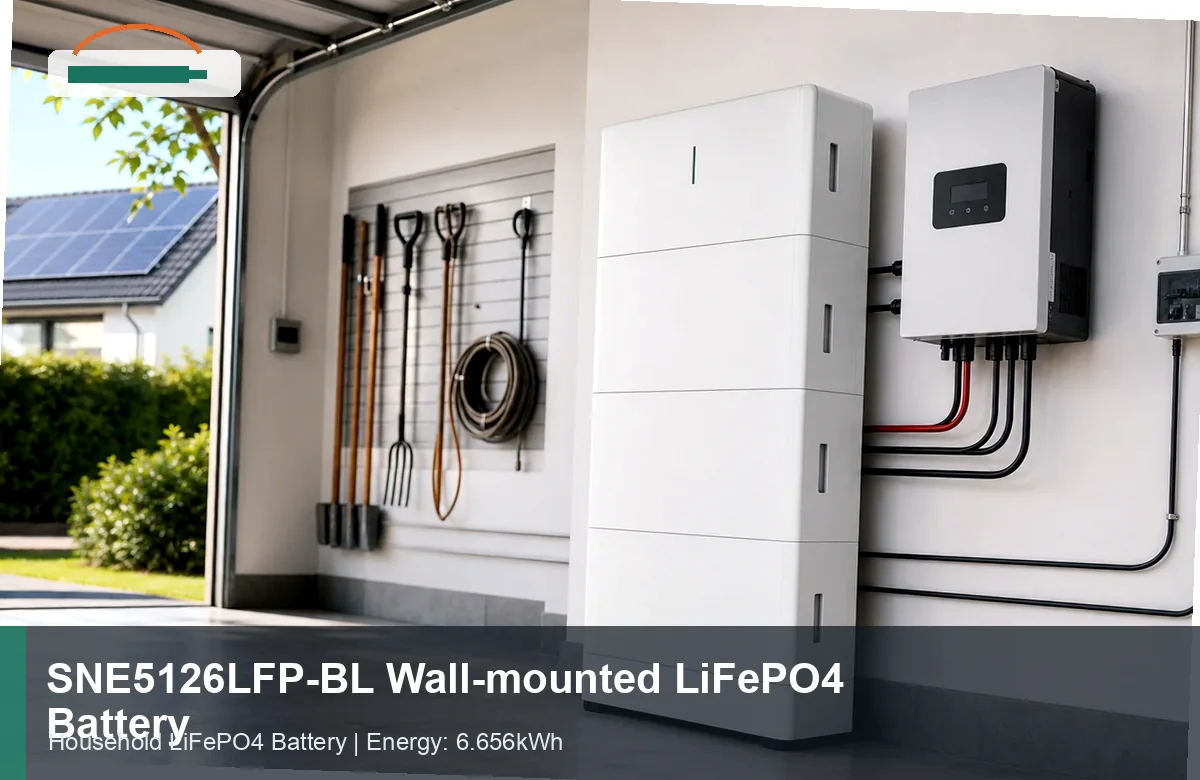
Residential Energy Storage / Household LiFePO4 Battery
6.656kWh wall-mounted LiFePO4 home battery for residential solar storage and backup.
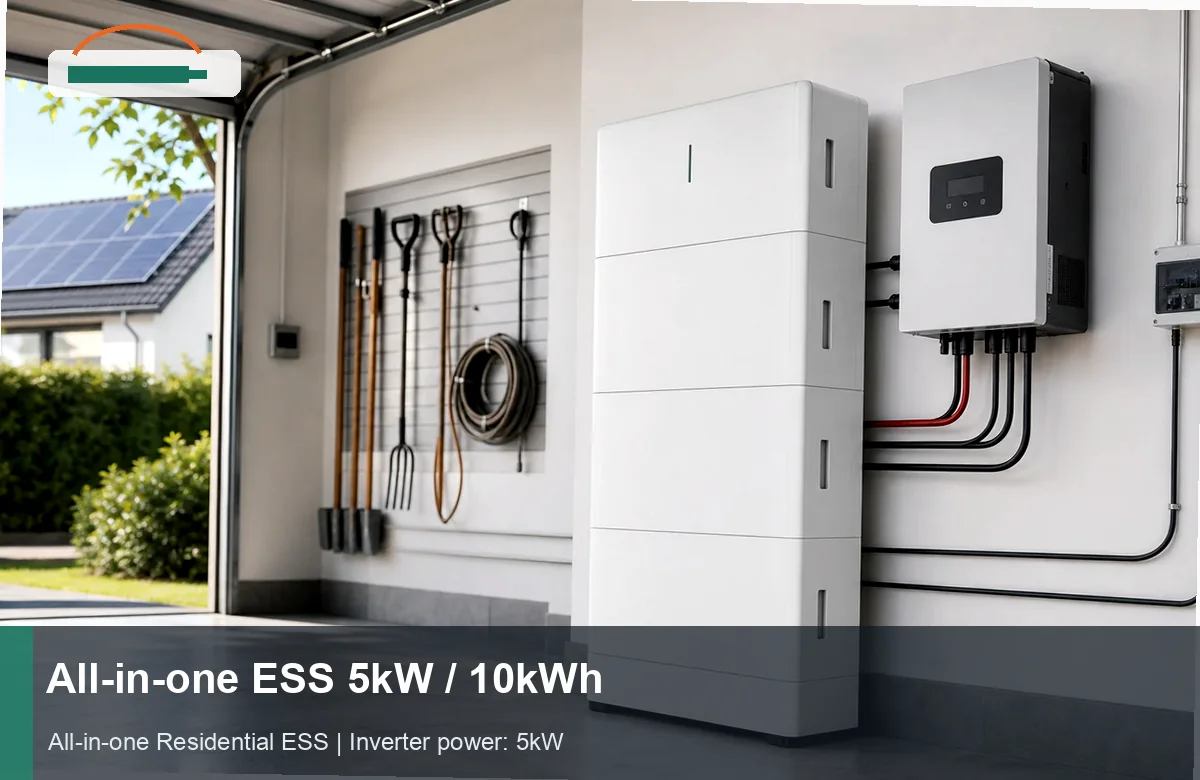
Residential Energy Storage / All-in-one Residential ESS
All-in-one wall-mounted residential ESS combining 5kW inverter and modular battery capacity.
LiFePO4 has a higher thermal runaway threshold than cobalt-based lithium chemistries and does not require active ventilation for indoor residential installation the way flooded lead-acid does. Both chemistries have well-established safety records when installed correctly per manufacturer guidelines. Check local installation codes for the specific site.
Cycle life varies by product and usage. The BluE-PACK5.1 references 10000 cycles and the SNE5126LFP-BL references more than 5000 cycles at the stated depth of discharge. Lead-acid cycle life at a safe depth of discharge is generally lower, but exact figures depend on the type and maintenance. Compare from the specific datasheets, not generic chemistry claims.
Often yes, but it requires checking bus voltage compatibility, updating the inverter or charger profile to the LiFePO4 charge curve, and confirming physical space and ventilation changes. The inverter may need a firmware update or settings change. Confirm with the inverter manufacturer and with sales that the models are compatible before specifying the replacement.
The BluE-PACK5.1 and the SNE5126LFP-BL both use CAN and RS485 communication, which lets the hybrid inverter read battery state of charge, temperature, and fault data in real time. Confirm compatibility with your specific inverter model with sales before the order.
LiFePO4 typically has a higher upfront cost per kilowatt-hour of rated capacity. However, usable energy per cycle is higher (90% DoD on the BluE-PACK5.1 versus a lower safe discharge depth for lead-acid) and the cycle-life reference is substantially higher. Over the full lifetime, the cost per usable kilowatt-hour is often lower for LiFePO4. Present both figures so the customer can decide based on their payback horizon.
At minimum UN38.3 test documentation and an MSDS for lithium transport. Depending on the destination and shipment mode, additional certificates may apply. The BluE-PACK5.1 carries CE, UN38.3, and MSDS; the SNE5126LFP-BL carries CE, IEC62619, UN38.3, and UL references. Confirm the exact document set for your destination with sales at inquiry, not after the order.
AI product assistant