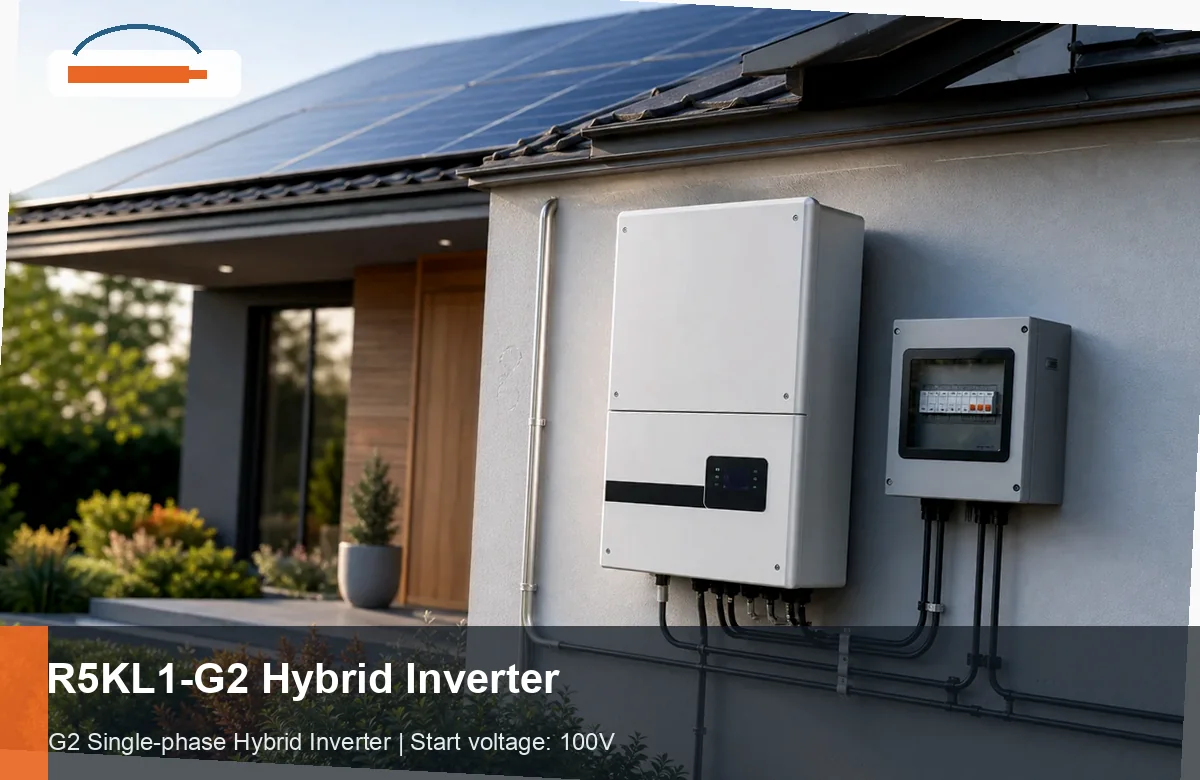
Solar Inverters / G2 Single-phase Hybrid Inverter
R5KL1-G2 Hybrid Inverter
Single-phase hybrid inverter range for residential solar storage systems.
Start voltage100VMax PV voltage500VBattery voltage40-58V
 Spire ESSHangzhou Xiangcai Network Technology Co., Ltd.
Inverter selection
When to source a hybrid inverter versus an off-grid unit, with real specs, use cases, parallel scaling, and an RFQ checklist.
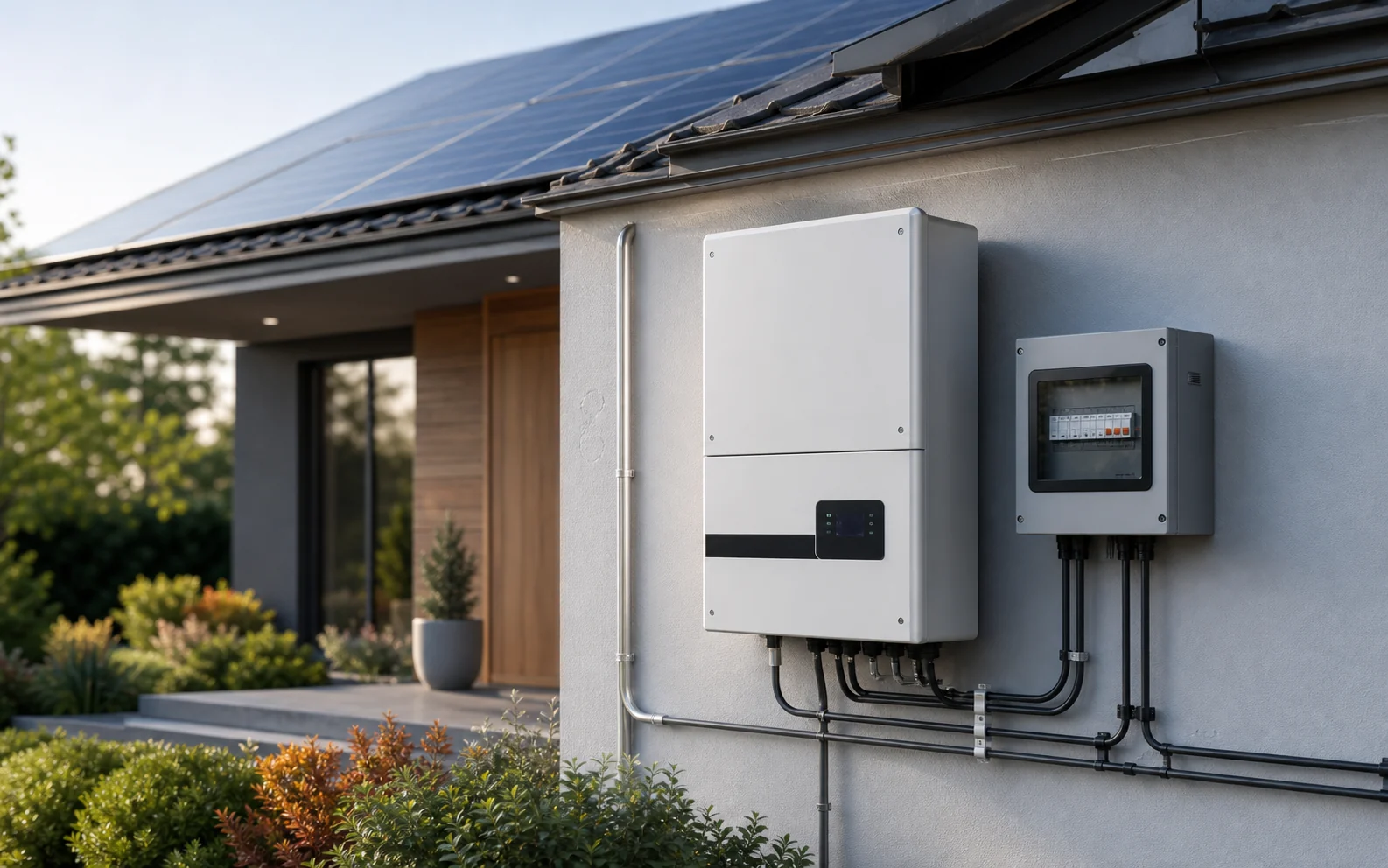
When a distributor or installer asks which inverter to source, the answer almost always comes down to the customer's relationship with the grid. Hybrid inverters work with the grid as a resource, storing solar energy in a battery and drawing from or pushing to the utility connection as conditions change. Off-grid inverters work without a grid connection at all, generating, storing, and delivering power from solar and battery alone. The two are not interchangeable, and sourcing the wrong one means a project that cannot be commissioned or cannot meet the customer's energy goals.
This page walks through how each type works, the customer situations that call for each, how to think about sizing and parallel expansion, and what to gather before building an RFQ. The specs here come from the R-G2 single-phase hybrid line and the SPIRE off-grid series available through Spire ESS.
What to decide before asking for price.
A hybrid inverter is a grid-interactive device. It sits between solar, battery, grid, and loads and continuously decides which source to use. When solar is high and loads are low it charges the battery or exports surplus; when solar is low and loads are high it draws from the battery first, then the grid; when the grid goes down it switches to island mode and keeps priority loads running from battery and solar. This is the feature set most residential and commercial customers in connected markets ask for. An off-grid inverter is a standalone power system with no grid connection: it converts DC from the battery to AC for loads and includes an integrated MPPT charger to harvest solar. There is no grid to export to, draw from, or synchronise with, which is the right architecture where a connection is unavailable or so intermittent it provides no practical value.
The R-G2 single-phase series covers 3kW to 8kW rated output, each with an integrated MPPT charger at 99.9% MPPT efficiency and a 40 to 58V battery window matching common residential LiFePO4. The R5KL1-G2 at 5kW accepts up to 7.5kW PV; the R8KL1-G2 at 8kW accepts up to 12kW PV, allowing array oversizing for partial-shade or low-irradiance conditions. Maximum system efficiency is 98.2% and transfer time is around 10ms. For three-phase markets the RxKH3 series covers 6kVA to 15kVA with a 1000V maximum PV input; for North American 120/240V split-phase, the RxKLNA series covers 5kVA to 10kVA with IP65 / NEMA 3R enclosures, also at a 40 to 58V battery window. From a sourcing view, the hybrid is the right recommendation when the site has a working grid and the customer wants lower bills through self-consumption, outage backup, or peak-tariff shifting.
The SPIRE off-grid series integrates a pure sine wave inverter, an MPPT solar charger, and an AC charger in one wall-mounted unit. The MPPT input window is 120 to 450VDC; maximum PV array power is 5000W for the 3500-24 and 6000W for the 5500-48. The AC charger draws up to 80A, so the system can also recharge from a generator or an intermittent utility connection, though this is not a grid-tied mode. Output is pure sine wave, safe for sensitive electronics and motor loads, with a 10ms transfer time. The SPIRE 3500-24 at 24VDC suits smaller banks and simpler wiring; the SPIRE 5500-48 at 48VDC suits larger banks where 48V reduces cable size and losses at higher power. Peak efficiency is above 93.6% on both. The 3500-24 delivers 3500W continuous with 7000VA surge; the 5500-48 delivers 5500W continuous with 11000VA surge. For more output, up to six units run in parallel for up to 33kW, with multi-unit three-phase configuration possible, suiting single homes, small microgrids, agriculture, telecom towers, and remote commercial facilities.
The most common mistake is treating the choice as a preference rather than a technical requirement. A hybrid inverter that cannot find a grid reference voltage will not operate in grid-tied mode; an off-grid inverter cannot export or synchronise. For urban and suburban residential markets where the grid is present and reliable, the customer's goal is reducing electricity cost and adding backup, so the hybrid is the fit and the conversation focuses on rated power, battery voltage compatibility, and the local grid standard. For rural electrification, islands, remote lodges, agriculture, telecom, and emergency deployments, the grid may be absent and the off-grid unit is correct, with the conversation focused on total daily load in kWh, peak surge, battery bank voltage and capacity, PV area, and whether parallel expansion is needed. There is also a middle category: sites with an unreliable connection where the customer wants to run independently most of the time and use the grid occasionally; some hybrid configurations support a priority mode that keeps battery and solar primary and treats the grid as backup, subject to local utility rules and firmware. Confirm that mode with sales when quoting such a site.
Most residential hybrid installations run a single inverter matched to peak demand, and the R-G2 range at 3kW to 8kW covers the majority of residential profiles; the three-phase RxKH3 at 6kVA to 15kVA extends the range without parallel configuration. Off-grid installations have more variable scaling because there is no grid to absorb demand spikes, so surge capacity matters as much as continuous rating: the SPIRE 3500-24 handles 7000VA surge and the 5500-48 handles 11000VA. For larger loads, the parallel path to 33kW using six SPIRE units covers a wide range of small commercial and community-scale applications. When quoting a parallel off-grid system the battery bank design becomes critical: at 33kW output the bank must deliver the corresponding current without excessive voltage sag, so bank sizing, cable gauge, and busbar configuration must match the parallel inverter count. Confirm full system design parameters with sales when a parallel configuration is in scope.
For any inverter inquiry, gather the installation type (residential, commercial, or off-grid remote), grid status (connected and stable, connected but unreliable, or no grid), target AC output voltage and frequency standard, total continuous load in watts and peak surge in VA, battery bank voltage preference or the battery already selected, planned PV array size and number of strings, required certifications, and quantity with a delivery window. For hybrid inquiries also confirm whether grid export is permitted, whether the installation is single-phase, split-phase, or three-phase, and any specific transfer-time requirement for sensitive loads. For off-grid inquiries also confirm whether parallel expansion is planned now or later, whether a generator or occasional grid connection is available for AC charging, and whether three-phase output from multiple parallel units is required. With those details, the R-G2 hybrid series and the SPIRE off-grid series cover most distributed solar storage from 3kW single-phase residential up to 33kW parallel off-grid; for projects outside these parameters, contact sales for project-specific configuration.
| Option | Best fit | What to confirm |
|---|---|---|
| Hybrid inverter | Connects grid, battery, and solar at once: self-consume solar, charge the battery with surplus, draw from the grid when needed, and export where the local standard allows. R-G2 single-phase line runs 3kW to 8kW, 40 to 58V battery, up to 12kW PV on the R8KL1-G2, 98.2% max efficiency, IP65. | Best when the customer has a reliable grid and wants lower bills through self-consumption, outage backup, or time-of-use shifting. The dominant residential and light-commercial export demand. |
| Off-grid inverter | Operates with no grid connection. The SPIRE series combines a pure sine wave inverter, MPPT charger (120 to 450VDC, 100A), and AC charger in one unit. SPIRE 3500-24: 3500W, 24VDC, 7000VA surge, up to 5000W PV. SPIRE 5500-48: 5500W, 48VDC, 11000VA surge, up to 6000W PV. Up to six units parallel for 33kW. | Best when there is no grid access or a grid too unreliable to serve as a reference voltage: cabins, rural homes, telecom shelters, islands, remote commercial sites. |
| Buyer decision | Ask first: does the site have a stable grid connection? If yes, a hybrid inverter is almost always the right start. If no, the off-grid unit is correct. | Then sharpen with grid standard and export permission, battery voltage on site (24V, 48V, or 40 to 58V LiFePO4), total load and surge demand, and phased expansion. Confirm any specific grid interconnection requirement with sales. |
Products
Solar Inverters / G2 Single-phase Hybrid Inverter
Single-phase hybrid inverter range for residential solar storage systems.
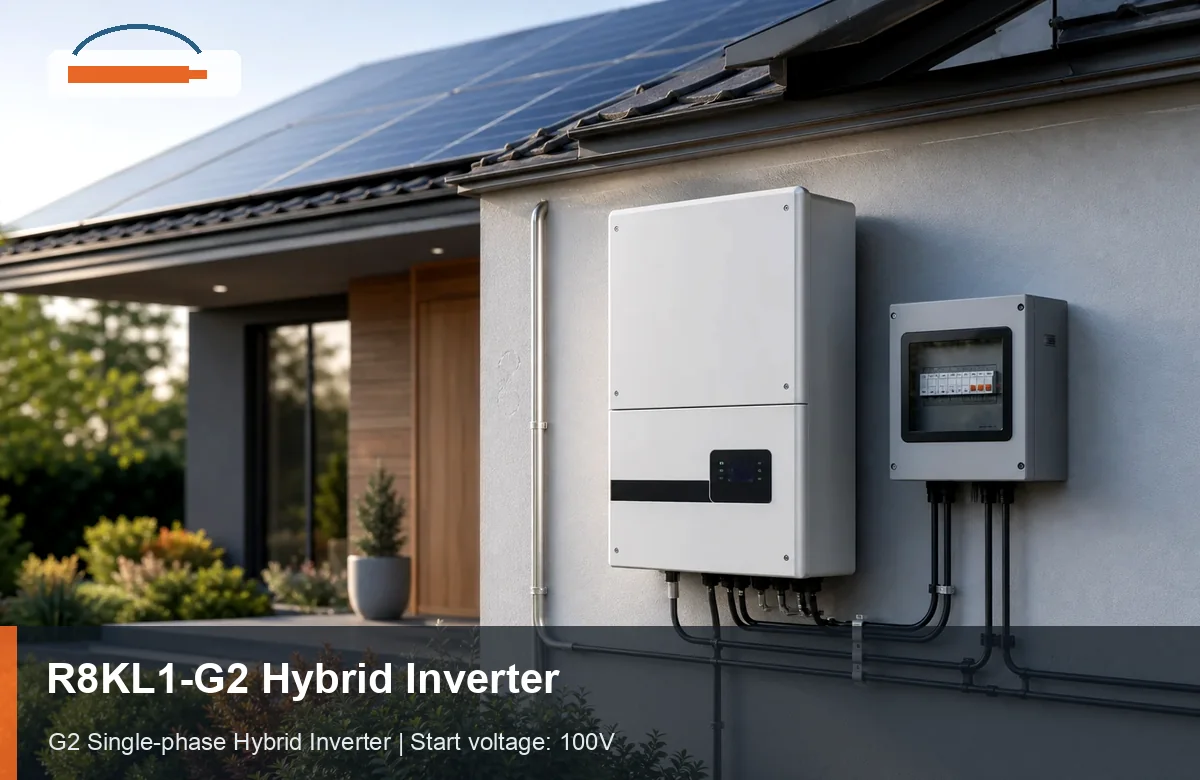
Solar Inverters / G2 Single-phase Hybrid Inverter
Single-phase hybrid inverter range for residential solar storage systems.
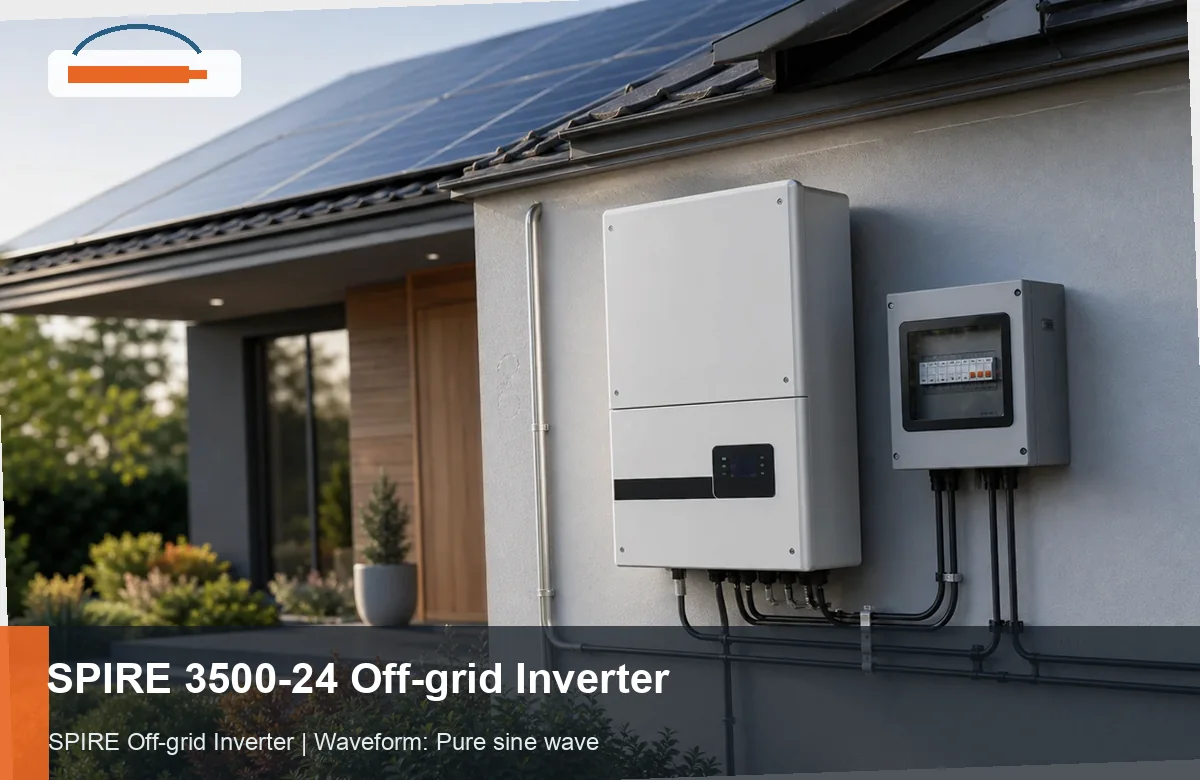
Solar Inverters / SPIRE Off-grid Inverter
Pure sine wave off-grid inverter with MPPT solar charging and parallel expansion reference.
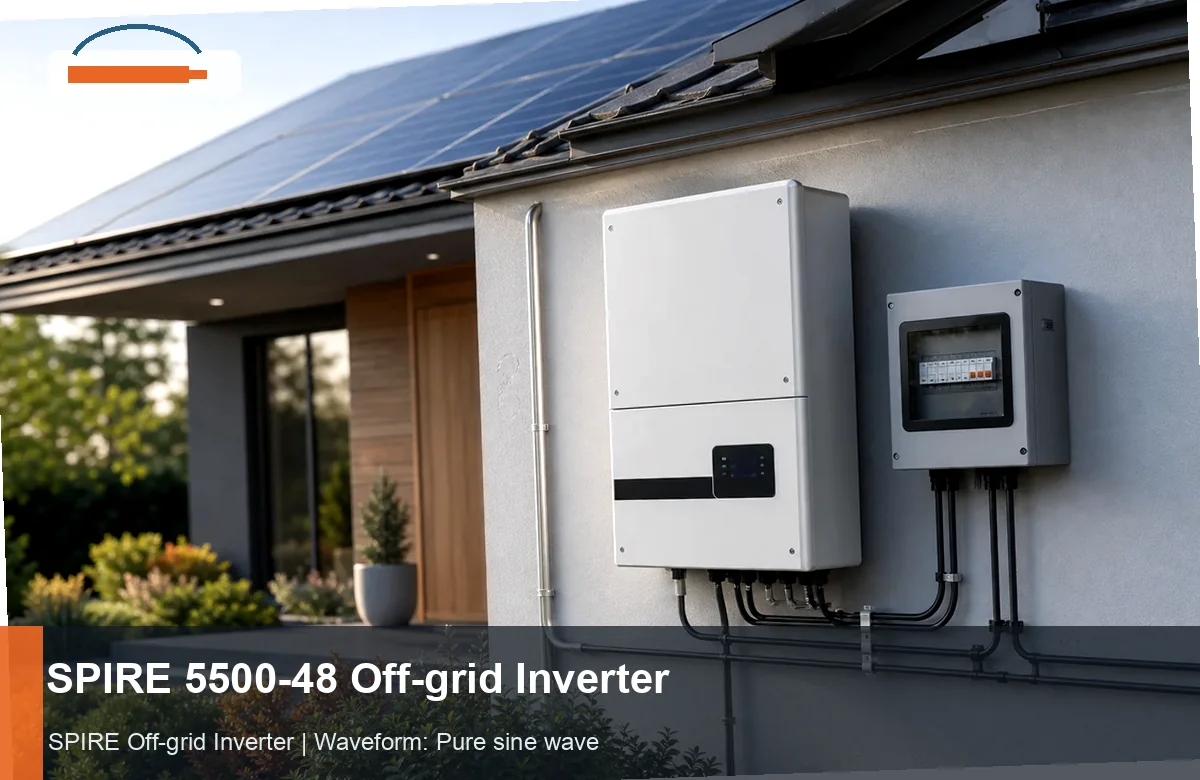
Solar Inverters / SPIRE Off-grid Inverter
Pure sine wave off-grid inverter with MPPT solar charging and parallel expansion reference.
Some hybrid inverters support an off-grid or island mode when the grid is absent, but this is not the same as a purpose-built off-grid inverter. Island mode typically requires a charged battery to establish a reference voltage, and not all load types are supported. If the site has no grid at all, a dedicated off-grid unit like the SPIRE series is more reliable. Confirm island-mode behaviour and limitations with sales before quoting a hybrid for a no-grid site.
It includes an AC charger input that can accept power from a generator or utility connection to recharge the battery, but this is not a grid-tied mode: it does not synchronise with the grid, does not export, and does not meet grid-tied interconnection standards. It is a standalone off-grid unit with an optional AC charge input.
The G2 single-phase series (R3KL1-G2 to R8KL1-G2) and the split-phase RxKLNA series operate at 40 to 58V, matching standard 48V-nominal LiFePO4 modules. The SPIRE 3500-24 needs a 24VDC bank and the SPIRE 5500-48 needs a 48VDC bank. The wrong bank voltage prevents correct operation.
Up to six SPIRE units connect in parallel for a combined continuous output of up to 33kW, with multi-unit three-phase configuration possible. Battery bank design, cable sizing, and busbar configuration must match the parallel count; confirm the full system design with sales when a parallel configuration is in scope.
The RxKLNA split-phase series covers 5kVA to 10kVA for North American 120/240V split-phase systems, with an IP65 / NEMA 3R enclosure and a 40 to 58V battery window. For US or Canadian projects, confirm the specific state or provincial interconnection requirement with sales.
Provide grid status, the target AC output standard, total continuous load and peak surge, planned battery bank voltage, PV array size, required certifications, destination market, quantity, and delivery window. For hybrid inquiries note whether grid export is permitted; for off-grid inquiries note whether parallel expansion is planned and whether a generator or AC charge source is available.
AI product assistant